
Best AI Marketing Automation Tools and Platforms in 2026
The market is flooded with options, but there is no single «best» AI marketing automation tool — the right pick depends on your business size, use case, and budget. For all-in-one B2B marketing, HubSpot’s Breeze AI leads; for e-commerce, Klaviyo specializes in behavioral targeting; for content, Jasper generates campaign copy at scale; for no-code workflows, Zapier connects thousands of apps; and for enterprise orchestration, Salesforce and Adobe Marketo Engage dominate, according to market research firm P&S Intelligence.

Below is what separates genuine AI capability from basic automation, a detailed look at each platform with real pricing, a side-by-side comparison table, and a framework for narrowing the list down to one.
What to Look for in an AI Marketing Automation Tool
Not every tool marketed as «AI-powered» actually uses machine learning to make decisions — some simply rebrand rule-based triggers. The distinction matters because it determines whether a platform can adapt to a customer’s behavior in real time or just execute a fixed sequence.
Core capabilities that separate AI tools from basic automation
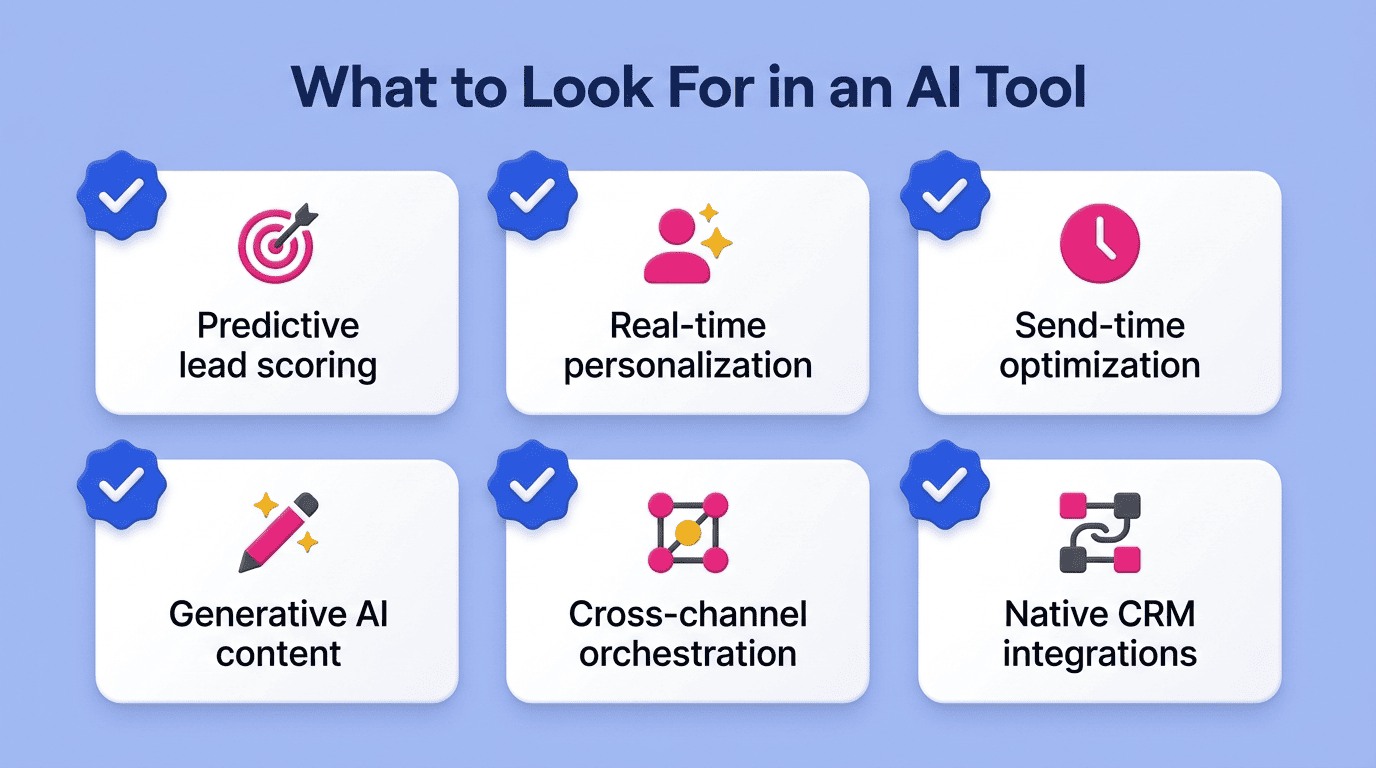
The tools worth paying for share a common set of capabilities:
- Predictive lead scoring — ranks prospects by likelihood to convert, based on behavioral and firmographic data rather than a static point system
- Real-time personalization at scale — tailors content per individual contact rather than per segment
- Send-time optimization — learns when each recipient is most likely to open and engage
- Generative AI for content — drafts subject lines, email copy, and ad creative directly inside the workflow
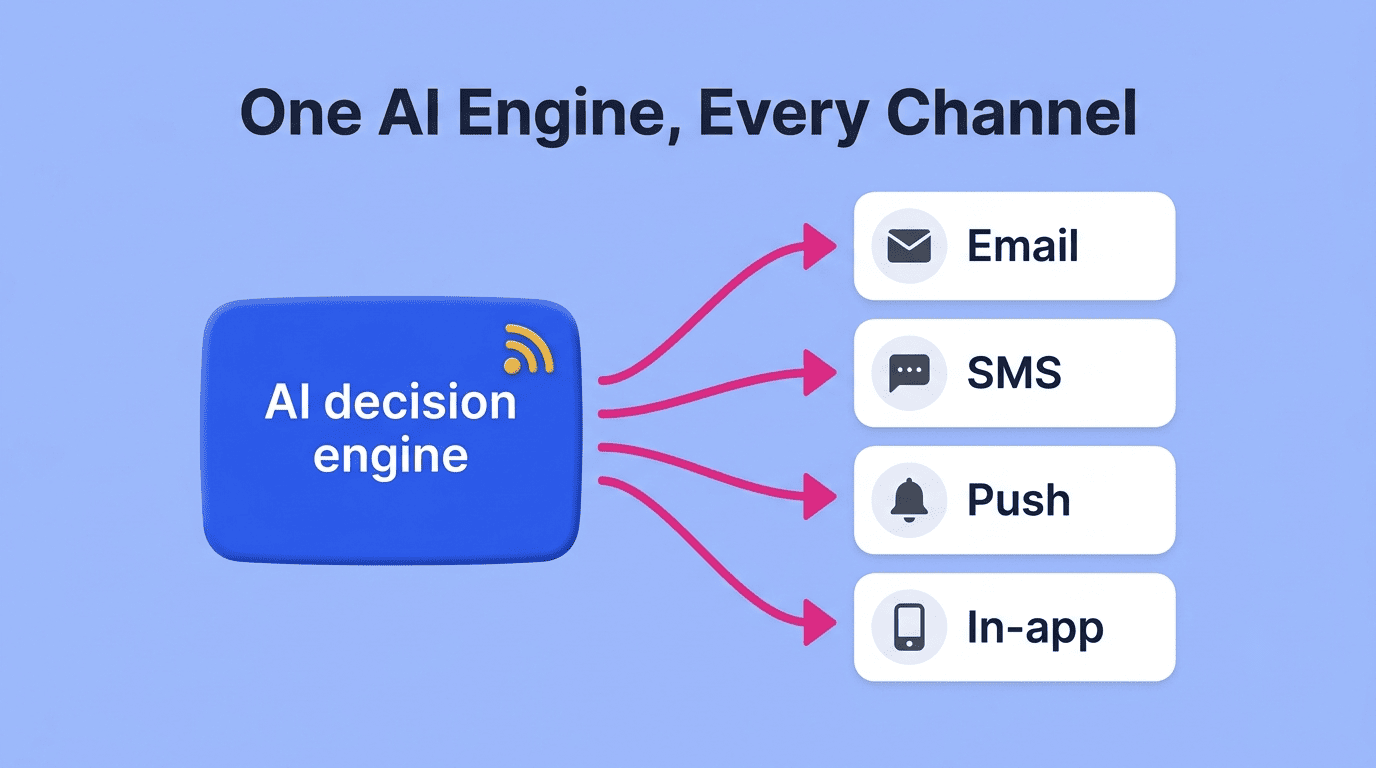
- Cross-channel orchestration — coordinates email, SMS, push, and in-app messages from one decision engine
- Native CRM integrations and analytics — closes the loop on what actually worked
Generative AI is the layer most vendors added most recently, but it’s the predictive and orchestration pieces underneath that actually separate an AI-powered platform from basic automation.
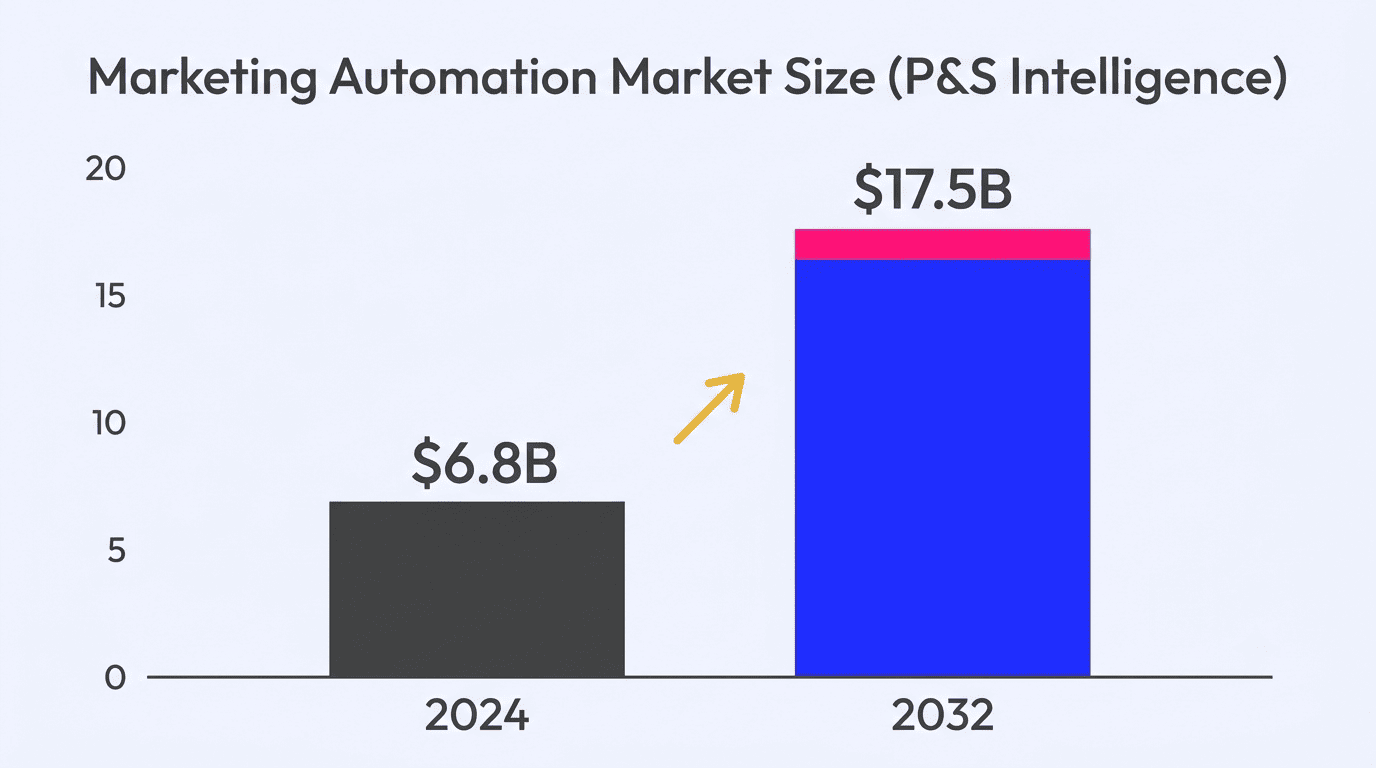
This isn’t a niche trend. The global marketing automation market was valued at roughly $6.8 billion in 2024 and is projected to reach $17.5 billion by 2032 at a CAGR of around 12.5%, according to P&S Intelligence, and an ActiveCampaign survey of 1,000 US marketing professionals found that AI users save an average of 13 hours a week by automating tasks that used to be done manually.
Match the tool to your business and budget
Enterprise teams running complex, multi-brand journeys typically land on Salesforce, Adobe Marketo Engage, or Braze — platforms built for orchestration across large contact volumes and dozens of integrations. Small and mid-sized businesses usually get more value from ActiveCampaign or Mailchimp, which bundle AI features into affordable tiers without the enterprise price tag. Specialists solve one problem exceptionally well: Klaviyo for direct-to-consumer e-commerce, Jasper for content production, and Zapier for stitching together a no-code stack.
The payoff for choosing correctly is significant. McKinsey research on generative AI in marketing found that gen AI can lift marketing productivity by roughly 5–15% of total marketing spend, with AI-driven personalization cutting cost to serve by up to 30% — and the ActiveCampaign survey cited above found the average AI user also saves roughly $4,739 a month in the process.
Best All-in-One AI Marketing Automation Platforms
All-in-one platforms bundle email, CRM data, lead scoring, and content generation into a single system so marketing and sales work off the same record. The trade-off is usually cost and setup complexity, which is why these tools skew toward mid-market and enterprise teams.
| Platform | Best for | Starting price |
|---|---|---|
| HubSpot (Breeze AI) | All-in-one B2B | Free tools; ~$20/mo Starter |
| Salesforce (Einstein/Marketing Cloud) | Enterprise orchestration | ~$1,250/mo |
| Adobe Marketo Engage | Enterprise B2B, large databases | ~$1,300/mo |
| Braze | Mobile-first lifecycle marketing | Custom quote |
HubSpot (Breeze AI) — best all-in-one for B2B
HubSpot’s Breeze AI is built directly into Marketing Hub rather than sold as an add-on, which is why it’s frequently cited as the most accessible all-in-one option. Breeze covers:
- Predictive lead scoring across the full contact database
- Lookalike audiences built from existing customer data
- Send-time optimization per contact
- Automated email personalization at the individual level
HubSpot offers a genuinely free tier with core tools, a Starter plan from roughly $20/month, and Professional/Enterprise tiers that scale from about $800 to $3,600/month depending on contact volume and feature set.
Salesforce and Adobe Marketo Engage — enterprise orchestration
Salesforce combines Einstein and Agentforce AI with Marketing Cloud and Pardot (rebranded Account Engagement) to deliver next-best-action recommendations and full journey orchestration across channels. Pricing for Account Engagement starts around $1,250/month on the Growth tier and climbs past $15,000/month for larger enterprise deployments. Adobe Marketo Engage takes a similar approach with predictive content scoring and behavioral lead grading; Adobe doesn’t publish list pricing, but mid-market deployments typically run $1,300–$6,000+/month, scaling higher for large contact databases.
Both platforms assume a dedicated marketing ops team to configure and maintain them — they are not built for a marketer setting up their first automated sequence.
Braze — best for mobile-first lifecycle marketing
Braze is a cross-channel lifecycle platform purpose-built for apps and mobile-first brands. Its BrazeAI layer includes Canvas Flow, which builds and adjusts customer journeys automatically, and a decisioning engine that determines the best channel and moment to reach each user based on real-time behavior. Braze does not publish standard pricing — quotes are based on active users and message volume, and deployments commonly start in the tens of thousands of dollars per year.
Best AI Marketing Automation Tools by Use Case
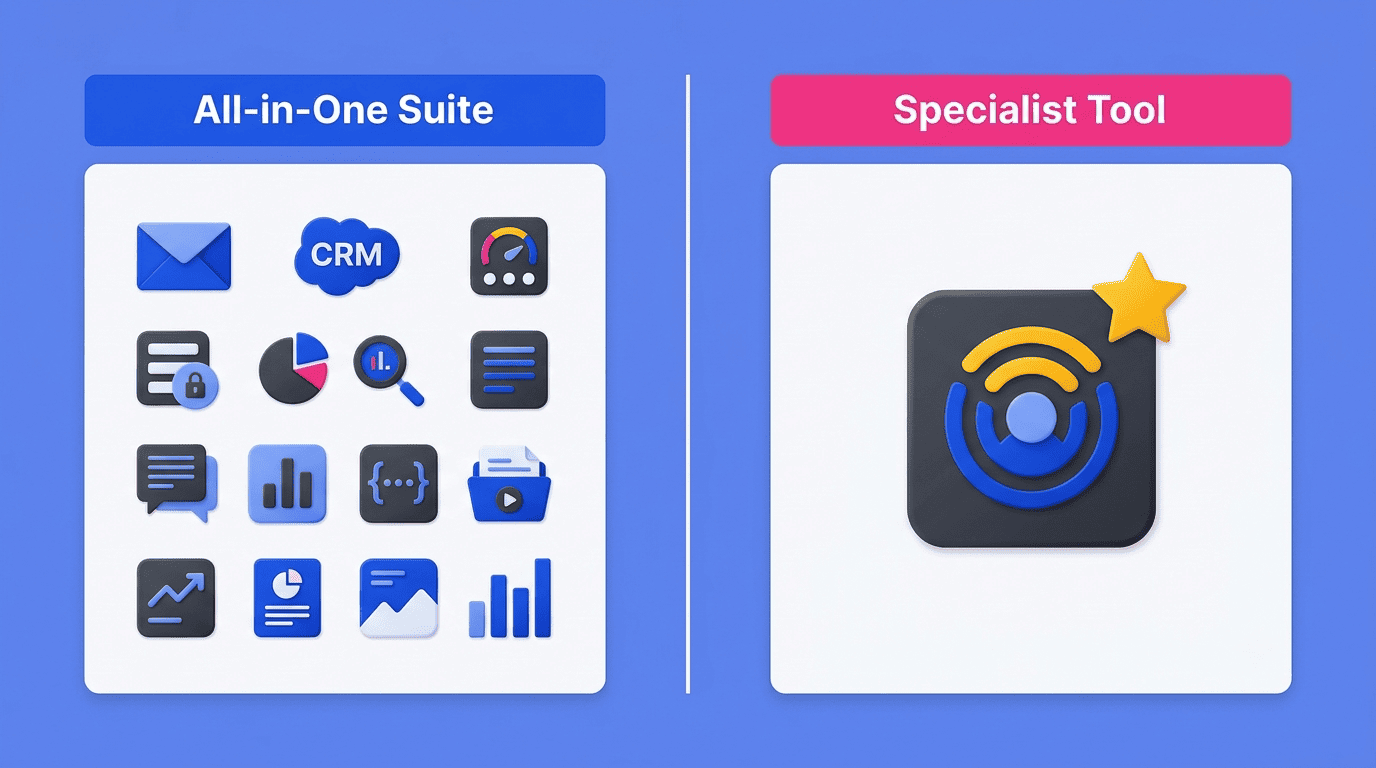
Not every team needs an all-in-one suite. A specialist tool that does one job exceptionally well is often the more efficient — and cheaper — starting point.
Handle e-commerce personalization at volume. Klaviyo builds its entire product around predicting what a shopper will do next and serving the offer that matches. It reads purchase history, browsing behavior, and email engagement to trigger abandoned-cart flows, win-back campaigns, and product recommendations without manual segmentation.
Produce campaign content faster. Jasper is a full-stack AI writing tool for blog posts, email campaigns, social copy, ad creative, and landing pages, trained on brand voice guidelines so output stays consistent across a team.
Automate the connective tissue between tools. Zapier doesn’t generate content or score leads itself — instead it links marketing tools together so data and triggers pass between them automatically, including connecting large language models to internal workflows.
Klaviyo — best for e-commerce and DTC
Klaviyo’s AI predicts customer lifetime value and purchase likelihood, then feeds that prediction into targeted email and SMS offers. It’s free for up to 250 contacts, moves to about $20/month for email-only plans, and $35/month for combined email and SMS — pricing that scales with list size rather than a flat enterprise fee.
Jasper — best for AI content and campaign copy
Jasper serves well over 100,000 active customers and covers the full content pipeline a marketing team touches: blog drafts, email sequences, social posts, ad copy, and landing page copy generated from a brand voice profile. The Creator plan starts at $39/month (billed annually) for 50,000 words, the Pro plan runs from $59/month, and Business is custom-quoted — third-party pricing trackers put realistic entry points around $500/month and up depending on seat count.
Zapier — best for no-code workflow automation
Zapier connects more than 9,000 apps, which makes it the default choice for marketers who need to automate a workflow across tools that don’t natively talk to each other. Common marketing use cases include:
- Syncing a new HubSpot or Salesforce contact into a Google Sheet or spreadsheet CRM
- Triggering a Slack alert the moment a high-value lead fills out a form
- Routing form submissions into an email platform’s automation sequence
- Connecting a large language model to internal marketing workflows without custom code
There’s a functional free tier (100 tasks/month), the Professional plan starts at $19.99/month billed annually, and the Team plan runs about $103.50/month for 2,000 tasks, with Enterprise custom-priced for higher volumes.
ActiveCampaign and Mailchimp — best for small business and budget
ActiveCampaign pairs email and CRM automation with AI-assisted send-time and content suggestions starting at $15/month, making it one of the more affordable entries with genuine automation depth. Mailchimp, now running on Intuit’s AI stack, offers a free plan for very small lists and scales to $350+/month as contact volume and feature needs grow, with AI content suggestions and product recommendations built in at every paid tier.
AI Marketing Automation Tools Pricing Comparison
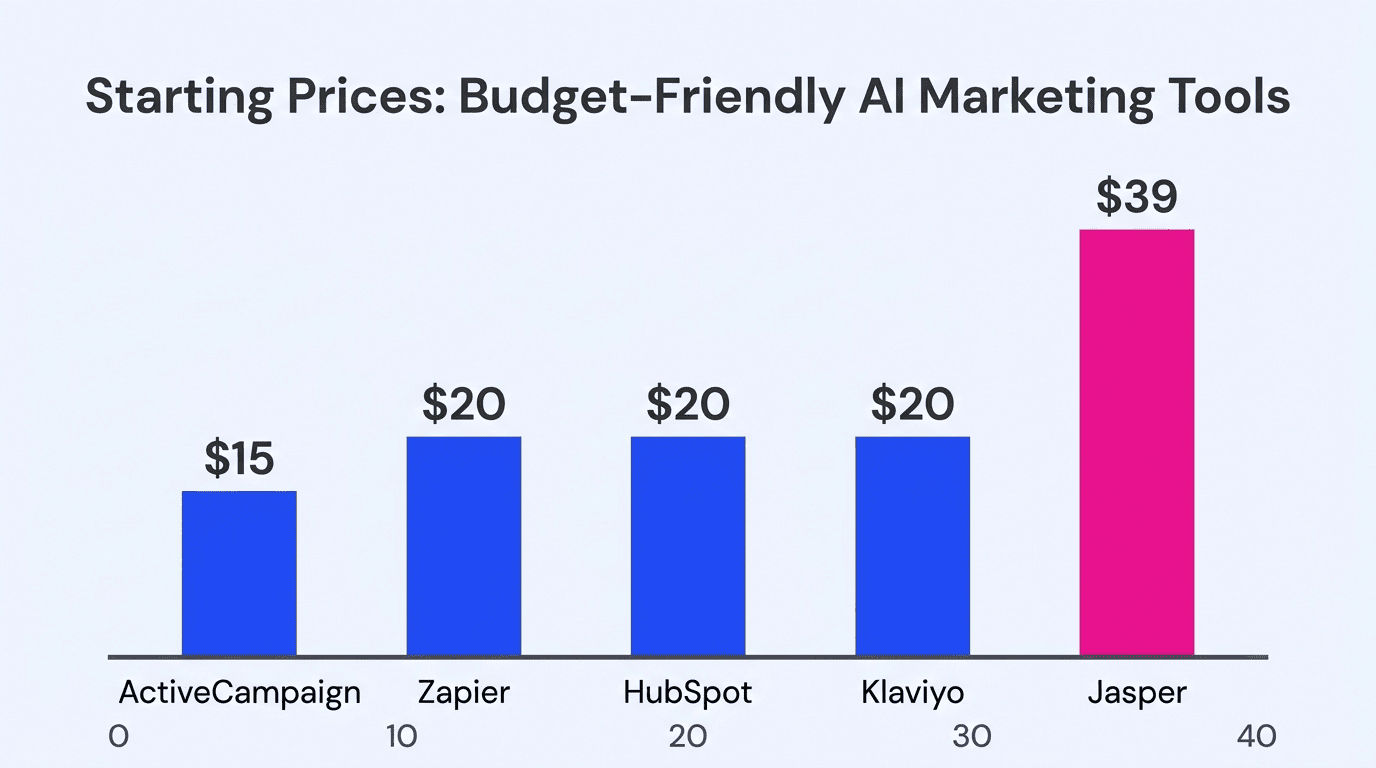
Pricing across this category varies by an order of magnitude depending on whether a platform targets a five-person startup or a global enterprise. The table below lines up starting price and free-tier availability for the eight tools covered above.
Side-by-side pricing table
| Tool | Best for | Starting price | Free tier |
|---|---|---|---|
| HubSpot | All-in-one B2B | ~$20/mo | Yes |
| Salesforce | Enterprise orchestration | ~$1,250/mo | No |
| Marketo Engage | Enterprise B2B | ~$1,300/mo | No |
| Braze | Mobile lifecycle marketing | Custom quote | No |
| Klaviyo | E-commerce/DTC | $20/mo | Yes (≤250 contacts) |
| Jasper | AI content creation | $39/mo | Trial only |
| Zapier | No-code workflows | $19.99/mo | Yes |
| ActiveCampaign | Small business | $15/mo | Trial only |
| Mailchimp | Small business | Free→$350+/mo | Yes |
The Federal Trade Commission has warned businesses using AI and algorithms to be transparent about how customer data feeds automated systems — a reminder worth keeping in mind before signing a contract, since a starting price rarely reflects the real cost once contact volume, add-ons, and usage-based fees are factored in.
How to Choose the Right AI Marketing Automation Platform
It should always start with the business problem you want to solve. When it starts that way, there is usually a good ending because the problem eventually ties back to serving customers better and delivering more value for the company.
Eric Lamarre, Senior Partner, McKinsey & Company
Picking a platform without a decision framework is how teams end up paying for enterprise orchestration they don’t need, or outgrowing a budget tool within six months. Before signing a contract, confirm the platform actually covers:
- The primary channel your team runs campaigns on (email, SMS, push, or all three)
- Native integration with your existing CRM, not just a Zapier bridge
- A pricing model based on contacts or usage that matches how your list will grow
- Access to the AI features you actually need — many «AI-powered» tiers gate lead scoring or generative content behind the top plan
A quick decision framework
- Define the primary use case. Decide whether the immediate priority is email/SMS automation, e-commerce personalization, content production, or full journey orchestration across channels.
- Set a realistic budget band. Enterprise orchestration tools start around $1,250–$1,300/month; specialist and SMB tools generally run $15–$40/month before add-ons.
- Check native integrations first. Confirm the platform connects directly to your existing CRM and analytics stack before evaluating AI features — a great AI layer on top of a broken data sync delivers nothing.
- Start with a free tier or single-use-case pilot. Test one function, such as predictive lead scoring or send-time optimization, before expanding to a full rollout.
- Measure against a baseline. Track open rates, conversion rates, or hours saved for 30–60 days against your pre-AI numbers.
- Decide on consolidation vs. best-of-breed. Most teams settle on one core platform plus one or two specialist tools (for example, HubSpot plus Jasper) rather than a single system trying to do everything.
- Revisit the stack annually. AI marketing tools ship new features quickly enough that a platform chosen 12 months ago may no longer be the strongest fit.